Your A1C number is just a percentage — but the interpretation behind that number tells you whether you’re in the normal range, on the path to type 2 diabetes, or already living with diabetes. This page shows the official A1C diagnostic chart from the American Diabetes Association, plus how target levels change by age, condition, and pregnancy.

Official A1C Diagnostic Ranges (CDC + ADA)
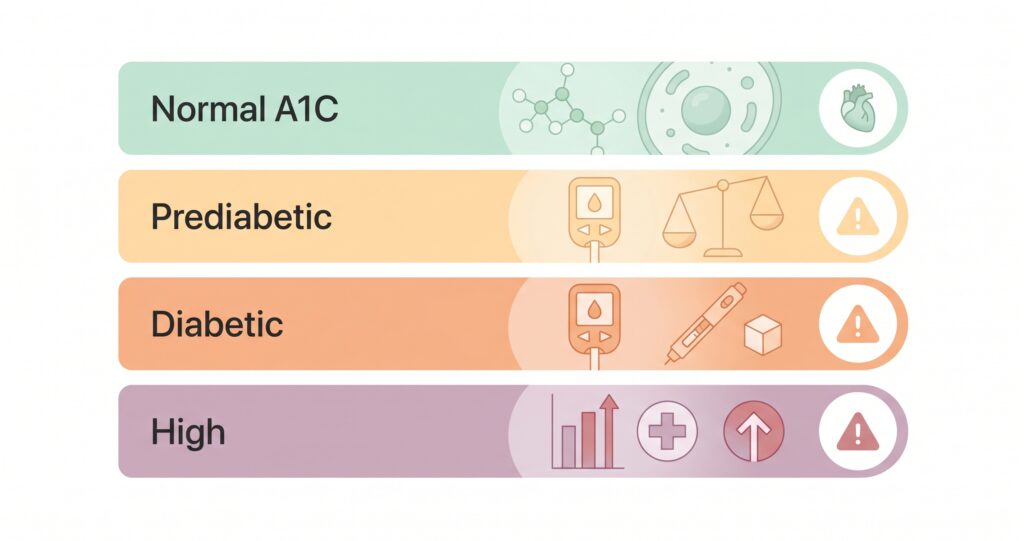
| A1C Range | Estimated Average Glucose | Classification |
|---|---|---|
| Below 5.7% | Below 117 mg/dL | Normal |
| 5.7% – 6.4% | 117 – 137 mg/dL | Prediabetes |
| 6.5% or higher | 140 mg/dL or higher | Diabetes |
A diagnosis of diabetes typically requires two separate A1C readings of 6.5% or higher, or one A1C plus a confirming fasting glucose ≥126 mg/dL or random glucose ≥200 mg/dL with symptoms (per the ADA Standards of Care).
A1C Target Levels by Patient Profile
| Patient profile | ADA-recommended A1C target |
|---|---|
| Most non-pregnant adults with type 2 diabetes | Below 7.0% |
| Newly diagnosed, long life expectancy, no significant cardiovascular disease | Below 6.5% |
| Older adults with multiple comorbidities or limited life expectancy | 7.5% – 8.0% |
| Pregnant women with diabetes | Below 6.0% (ideally below 6.5%) |
| Women with gestational diabetes | Below 6.0% |
These targets are general guidance — your individual target depends on age, how long you’ve had diabetes, hypoglycemia risk, and what other health conditions you have. Always set your personal A1C target in consultation with your doctor.
A1C Chart by Age
Older adults face a different risk-benefit calculus than younger adults. Tight A1C control reduces long-term complications, but increases hypoglycemia risk — which is more dangerous in older adults (falls, cardiac events). The ADA publishes age-stratified guidance:
| Age group | Health status | Recommended A1C target |
|---|---|---|
| Under 65 | Healthy | Below 7.0% |
| Under 65 | New diagnosis, no complications | Below 6.5% |
| 65 – 75 | Healthy, few comorbidities | Below 7.5% |
| 65 – 75 | Multiple chronic conditions | 7.5% – 8.0% |
| Above 75 | Most patients | 7.5% – 8.5% |
| Above 75 | End-stage chronic illness, hospice | Avoid hyperglycemia symptoms; no fixed target |
What Each A1C Range Means in Practice
A1C below 5.7% — Normal
Your average blood sugar is in the healthy range. No immediate diabetes-related action is needed, but if you have risk factors (family history, overweight, sedentary lifestyle, age above 45), get retested every 3 years.
A1C 5.7–6.4% — Prediabetes
You’re at substantially increased risk of progressing to type 2 diabetes. Without intervention, about 1 in 4 people with prediabetes will progress to diabetes within 5 years (per CDC data). The good news: lifestyle intervention can reduce that progression risk by 58% (Diabetes Prevention Program trial). See our prediabetes signs guide and A1C reduction playbook.
A1C 6.5–7.0% — Diabetes (well-controlled)
You meet the diagnostic criteria for diabetes, but your average glucose is in a relatively well-controlled range. Most patients in this range can stay there with diet, exercise, and a single medication like metformin.
A1C 7.1–8.0% — Moderate control
Your average glucose is above target. Risk of long-term complications — retinopathy, neuropathy, nephropathy — rises noticeably above 7%. Talk to your doctor about adjustments: stricter diet, additional or different medication, or in some cases a GLP-1 agonist like Ozempic or Mounjaro.
A1C 8.1–9.0% — Poor control
Sustained A1C above 8% substantially increases complication risk. Treatment intensification is warranted. Many patients in this range benefit from combination therapy or adding insulin.
A1C above 9.0% — Very poor control
Urgent treatment review needed. If you’re experiencing symptoms (extreme thirst, frequent urination, blurred vision, fatigue) contact your doctor without delay. See our high blood sugar warning signs guide.
Frequently Asked Questions
What is a dangerous A1C level?
A1C above 9.0% is associated with substantial risk of long-term complications and acute symptoms. A1C above 12% may indicate uncontrolled diabetes requiring urgent medical attention. If you’re experiencing symptoms of very high blood sugar, contact your doctor immediately.
What’s the highest A1C can go?
A1C can theoretically reach 14% or higher. Levels above 12% are usually accompanied by significant hyperglycemia symptoms and may signal need for urgent treatment.
Can I lower my A1C by 1% in 3 months?
Yes, this is achievable for many patients through combined diet, exercise, and weight loss interventions. Lifestyle change alone can typically drop A1C 0.5–2.0 percentage points over 3–6 months. Adding or adjusting medication can produce additional reduction.
What is the ideal A1C for a 70-year-old?
Per ADA Standards of Care, healthy older adults (65–75) with few comorbidities should target A1C below 7.5%. Those with multiple chronic conditions may target 7.5–8.0% to reduce hypoglycemia risk.
Does A1C vary by ethnicity?
There’s evidence that A1C may run slightly higher in some populations (Black, Hispanic, Asian) compared to non-Hispanic white populations at the same actual glucose level, due to differences in red blood cell biology. This is an active research area; the ADA uses the same diagnostic thresholds across ethnicities.

Sources & Further Reading
- American Diabetes Association — A1C and Diabetes
- CDC — A1C Test & Race/Ethnicity
- ADA Standards of Care 2024 — Glycemic Targets
- NIDDK — The A1C Test