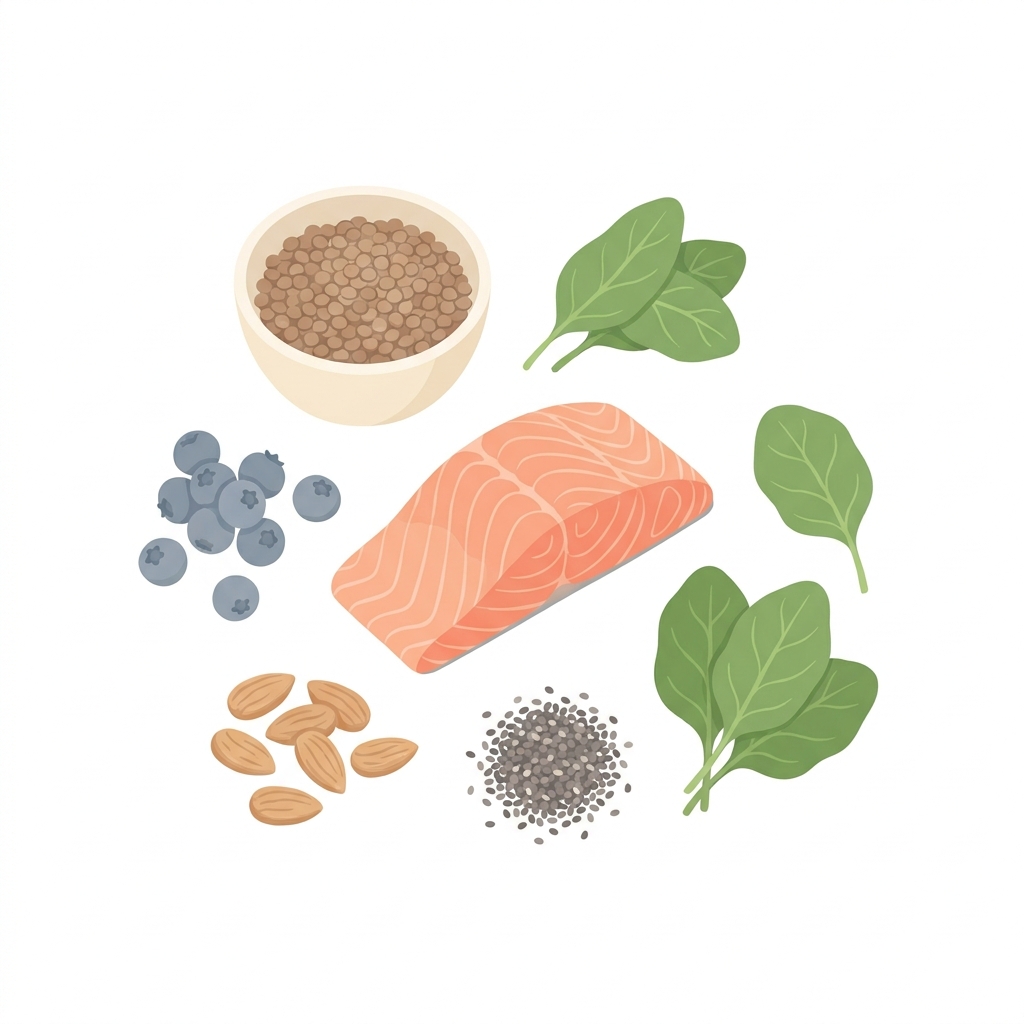
Some foods raise blood sugar fast; others actively help lower A1C over time. The difference comes down to fiber, protein, healthy fats, antioxidants, and glycemic load. Below are the categories of food with the strongest evidence for A1C reduction — with specific examples and the mechanisms that make them work.

Non-Starchy Vegetables
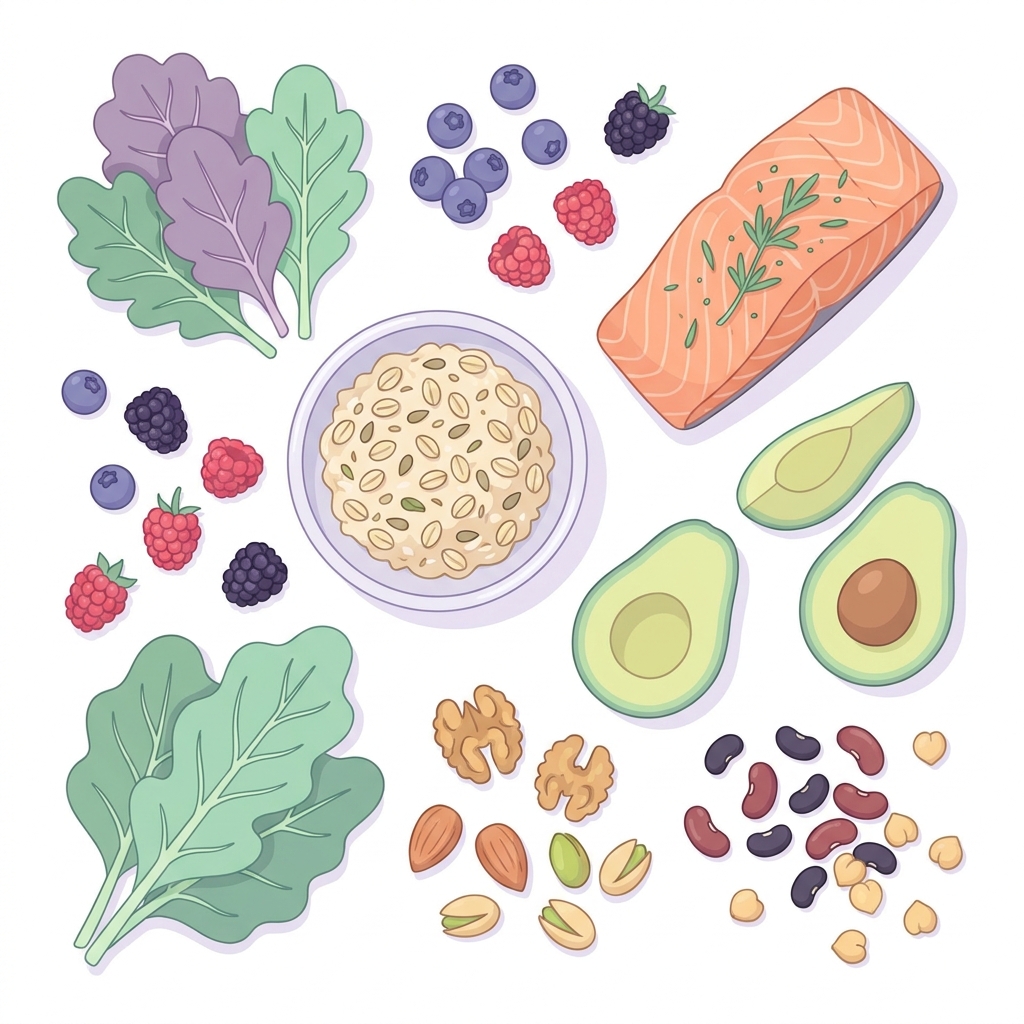
These are the highest-volume, lowest-glycemic-impact foods you can eat. Aim for half your plate at lunch and dinner.
- Leafy greens (spinach, kale, arugula, Swiss chard) — high in magnesium and polyphenols linked to improved insulin sensitivity
- Cruciferous vegetables (broccoli, cauliflower, Brussels sprouts, cabbage) — sulforaphane has been shown in small trials to improve fasting glucose
- Bell peppers, zucchini, cucumber, asparagus, green beans — very low glycemic load
Legumes — The Underrated A1C Reducer
Beans, lentils, and chickpeas are the rare carbohydrate source that’s actively helpful for blood sugar control. A meta-analysis in Diabetes Care found that diabetics adding 1 cup of legumes per day for 3 months reduced A1C by 0.5%. The combination of soluble fiber, slow-digesting starch (resistant starch), and plant protein creates a near-perfect glycemic profile.
- Black beans, kidney beans, navy beans, pinto beans
- Lentils (red, green, brown)
- Chickpeas (whole or as hummus)
- Edamame and other soy beans
Whole Grains (the Right Ones)
Not all “whole grains” are equal. Cracked, rolled, or pulverized whole grains spike glucose almost as much as refined ones. Intact whole grains — steel-cut oats, barley, quinoa, farro, freekeh — have substantially lower glycemic impact.
Berries
Strawberries, blueberries, raspberries, blackberries are nutritional outliers for fruit: low in sugar, high in fiber, and packed with anthocyanins (the pigments that give them color) which have antioxidant and insulin-sensitizing effects. A daily cup of berries has been associated with measurable A1C improvement in observational studies.
Nuts & Seeds
A meta-analysis in the BMJ found that consuming 1 ounce of tree nuts daily reduced A1C by approximately 0.1–0.2 percentage points — small but meaningful when stacked with other interventions. Best choices: almonds, walnuts, pistachios, pecans. Avoid heavily salted or candied varieties.
Chia and flax seeds deserve special mention — both are exceptionally high in soluble fiber and omega-3 fatty acids. 1–2 tablespoons of either, added to oatmeal or smoothies, can blunt post-meal glucose spikes.
Fatty Fish
Salmon, sardines, mackerel, anchovies, and trout provide long-chain omega-3 fatty acids (EPA and DHA) which reduce inflammation linked to insulin resistance. The ADA recommends 2–3 servings of fatty fish per week for people with type 2 diabetes.
Fermented Foods
Emerging research links gut microbiome diversity to insulin sensitivity. Foods like Greek yogurt (plain, unsweetened), kefir, sauerkraut, kimchi, and kombucha (low-sugar varieties) feed beneficial gut bacteria. Effect sizes on A1C are small but the cardiometabolic benefit is well-established.
Specific Spices With Glucose-Lowering Effects
- Ceylon cinnamon — 1–6 grams daily has shown 0.1–0.3% A1C reduction in trials. Use Ceylon, not cassia (high coumarin content).
- Turmeric — the curcumin compound has anti-inflammatory effects supportive of insulin sensitivity
- Fenugreek — the seeds have modest fasting glucose reduction effects
- Garlic — small but consistent fasting glucose reduction in trials
What to Limit or Avoid
Equally important as adding the right foods: removing the ones that spike A1C. The biggest offenders:
- Sweetened drinks — soda, fruit juice, sweetened coffee drinks, energy drinks. Replace with water, sparkling water, unsweetened tea/coffee.
- White bread, white rice, regular pasta — swap to whole-grain or legume-based versions. See our best pasta for diabetics guide.
- Pastries, cookies, candy — the obvious culprits; even small daily amounts add up to A1C points
- Sweetened breakfast cereals — replace with steel-cut oats or Greek yogurt + berries
- Processed meats — see our guide on meats and diabetes
Sample Day of A1C-Friendly Eating
| Meal | Example |
|---|---|
| Breakfast | Greek yogurt (plain) + 1/2 cup berries + 1 tbsp chia seeds + small handful walnuts |
| Lunch | Large salad with grilled chicken, mixed greens, chickpeas, cherry tomatoes, olive oil + lemon dressing |
| Snack | 1 ounce almonds + 1 small apple |
| Dinner | Baked salmon, roasted broccoli + cauliflower, 1/2 cup quinoa with herbs |
| Optional snack | Cottage cheese with cucumber + sprinkle of Ceylon cinnamon |
Frequently Asked Questions
What food brings down A1C the fastest?
No single food dramatically lowers A1C on its own — it’s the cumulative effect of dietary pattern over 8–12 weeks. That said, the foods with the strongest evidence per study are legumes (1 cup/day cut A1C 0.5% in 3 months), berries, fatty fish (2-3 servings/week), and chia/flax seeds (1-2 tbsp daily).
Are eggs OK for diabetics?
Yes — eggs are nearly carb-free and provide high-quality protein that blunts post-meal glucose spikes. Earlier concerns about cholesterol in eggs have been largely dispelled by current research. 1–2 eggs/day is fine for most people with type 2 diabetes.
Is oatmeal good for A1C?
Yes, but the type matters. Steel-cut or rolled oats (not instant) have a substantially lower glycemic load. Pair with protein (Greek yogurt, nuts) and avoid added sugar to maximize the benefit.
Does coffee affect A1C?
Regular coffee consumption is associated with slightly lower diabetes risk in observational studies, possibly due to chlorogenic acid and other polyphenols. Black coffee has minimal direct effect on blood sugar. Sweetened or heavily cream-laden coffee drinks are the issue.
Are bananas bad for A1C?
Whole bananas are not “bad” but they’re higher in carbohydrate than most fruits. A small or medium banana (or half a large one) is fine paired with protein/fat (nut butter, Greek yogurt). Eat unripe (greener) bananas for lower glycemic impact.

Sources & Further Reading
- Diabetes Care — Effect of Legumes on Glycemic Control
- BMJ — Tree Nuts and Glycemic Control
- Mayo Clinic — Diabetes Diet
- CDC — Healthy Eating & Diabetes
- ADA — What Can I Eat?